
Scholar Reports: Samuel Griffith Conference 2026
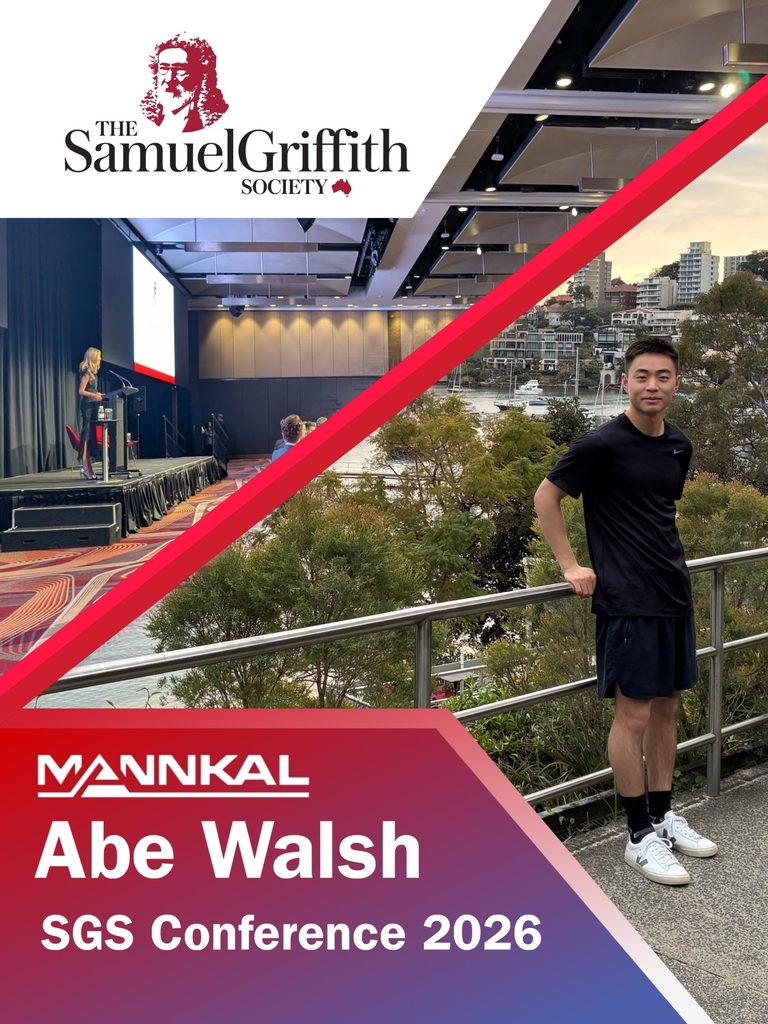
Attending the Samuel Griffith Society’s 36th National Conference in Sydney offered three days of rigorous debate on constitutionalism, the rule of law and the proper limits of judicial power, as well as a great opportunity to meet incredible people and explore the vastness of what Sydney has to offer.
Across the conference, the sessions I found most engaging offered a perspective I had not previously considered.
Professor Anne Twomey AO gave a rigorous historical account of constitutional interpretation, highlighting how the 1920 Engineers’ Case shifted the High Court away from the framers’ original intent and, in her view, has had lasting consequences for the balance of federalism. She also noted that original intent alone cannot resolve every constitutional question, but also losing sight of it altogether comes at a cost.
The standout moment for me was The Honourable Justice Michael Lee’s 16th Sir Harry Gibbs Memorial Oration, which flipped the usual anxiety about artificial intelligence to argue how rather than fearing machines becoming more human, he warned how we should be more concerned about humans becoming more like machines in how we reason and judge.
Across the weekend, the conference also offered an amazing opportunity to network with students from around the country, as well as practising lawyers, academics and judges, over sessions and dinners.
Altogether, the conference reinforced why the Society’s defence of parliamentary sovereignty and common law tradition remains a necessary and important debate.”
Abe Walsh
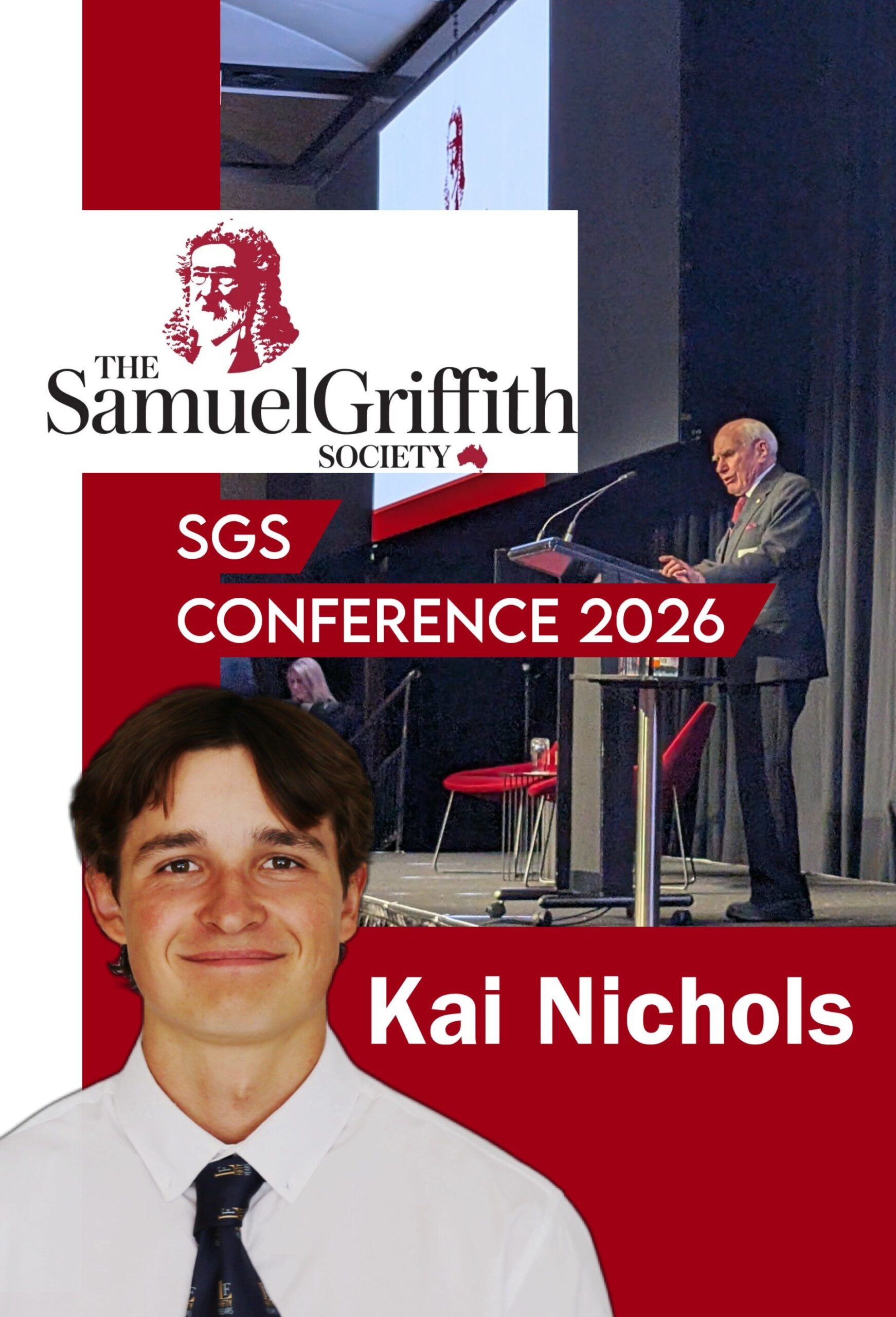
The first time that I heard about the Samuel Griffith Society was earlier this year when Mia Schlicht enlightened us at a Mannkal seminar. She talked about Sir Samuel Griffith, who I had never heard of, as well as the Australian constitution. In high school we only briefly touched on the subject but never who founded it. I am now beginning to realize the power that constitutional law has on Australia’s future and that a correctly written bill of rights could greatly benefit us.
The conference opened with Chris Merritt, the Vice President of the Rule of Law Institute. He talked about using the Constitution to defend the rights of the Australian people. Furthermore, he explained how the NSW scheme would undermine parliament by using laws to expand police powers without adequate public consultation, leading to a police state. His next argument was that a bill of rights in Australia would impede on our freedom and act as another mechanism for unelected judges to abuse.
He was then followed by Professor Anne Twomey, who gave me a new perspective on constitutional law and how it was viewed pre-engineers. The story of why the constitution was created turned out to be very humorous, and I am inspired to learn more. She then followed up stating that original intent could never be the sole way to view the Constitution, as doing so would decline all the laws written after it.
Justice Michael Lee gave a speech on the rise of AI’s involvement in law and how it could not replace a lawyer but make one more efficient. Those were the highlights of the conference for me, including the debate between Louise Clegg and Professor James Allan, who fought fiercely and inspired me to improve my debating skills. The key takeaway from this conference will be how I can use the constitution to defend my freedom in the future.